
World Cup 2026 Betting Guide for Irish Punters
 Available in US
Complete World Cup 2026 betting hub for Irish punters. Odds, group analysis, team profiles, predictions, and expert tips for all 104 matches across 48 nations.
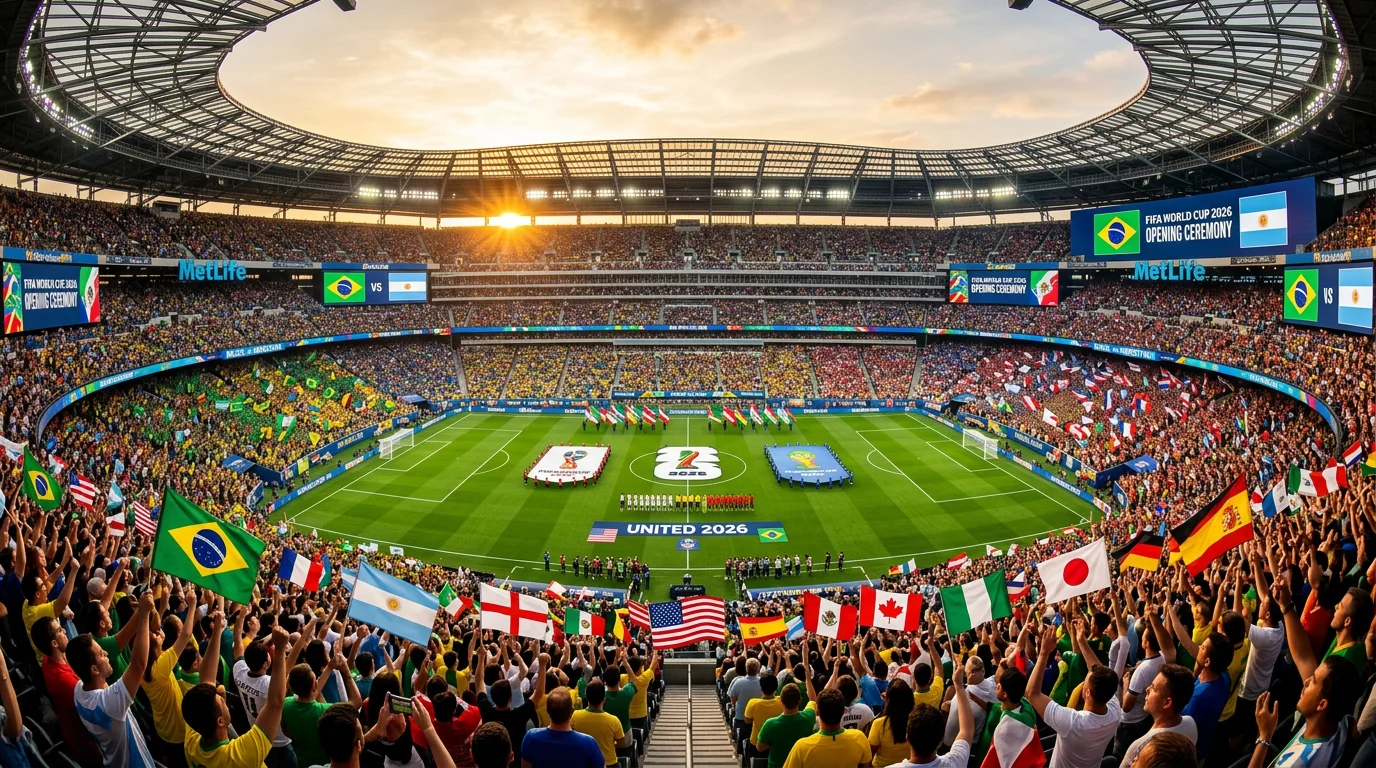
The summer of 2026 brings football's greatest spectacle to North America — and for Irish punters, it arrives with a sting. The Republic of Ireland came agonisingly close to qualifying, only to fall on penalties in Prague against Czechia. That 2-2 draw on 26 March 2026 still burns. I watched it from a Dublin pub, surrounded by supporters who had dared to believe that this generation might finally end our World Cup drought stretching back to 2002. Instead, we're left as neutral observers with a grudge, free to back whoever we fancy without emotional baggage — or perhaps to back against our tormentors.
This hub page serves as your central command for World Cup 2026 betting. I have spent a decade covering international tournament football from a betting perspective, specialising in the knockout-stage markets and value plays that separate sharp punters from the recreational crowd. What I offer here is not a tipster's promise of guaranteed returns — no serious analyst makes such claims — but rather a framework for approaching the tournament intelligently. The 48-team format is entirely new. The expanded structure creates fresh market dynamics that even experienced bookmakers are still calibrating. That uncertainty is where value lives.
From the opening match at Estadio Azteca on 11 June to the final at MetLife Stadium on 19 July, 104 fixtures will unfold across three countries. Irish Standard Time places most evening kick-offs in North America between midnight and 3am IST — a detail that matters for in-play strategies and your general wellbeing. I will address the timezone factor directly, alongside the new regulatory landscape under the Gambling Regulation Act 2024 and the freshly operational GRAI framework. Whether you are building accumulators, hunting each-way value on darkhorses, or simply want to understand how the new group-stage format affects qualification probabilities, this page connects you to the deeper analysis across the site.
What Every Irish Punter Needs Before Kick-Off
- The expanded 48-team format creates new value opportunities — top two plus eight best third-placed teams advance from groups, fundamentally changing qualification maths
- Ireland missed out on penalties against Czechia in March 2026, but England, Scotland and the Czech Republic all qualified, giving Irish viewers narrative angles to follow
- Late-night kick-offs dominate the schedule — most North American evening matches fall between midnight and 3am IST, affecting in-play betting approaches
- The Gambling Regulation Act 2024 and new GRAI licensing framework reshape how Irish punters interact with bookmakers during this tournament
- Outright markets favour Argentina, France and Brazil at single-figure odds, but the new format historically benefits host nations and dark horse runs
World Cup 2026: Format, Dates and Host Cities
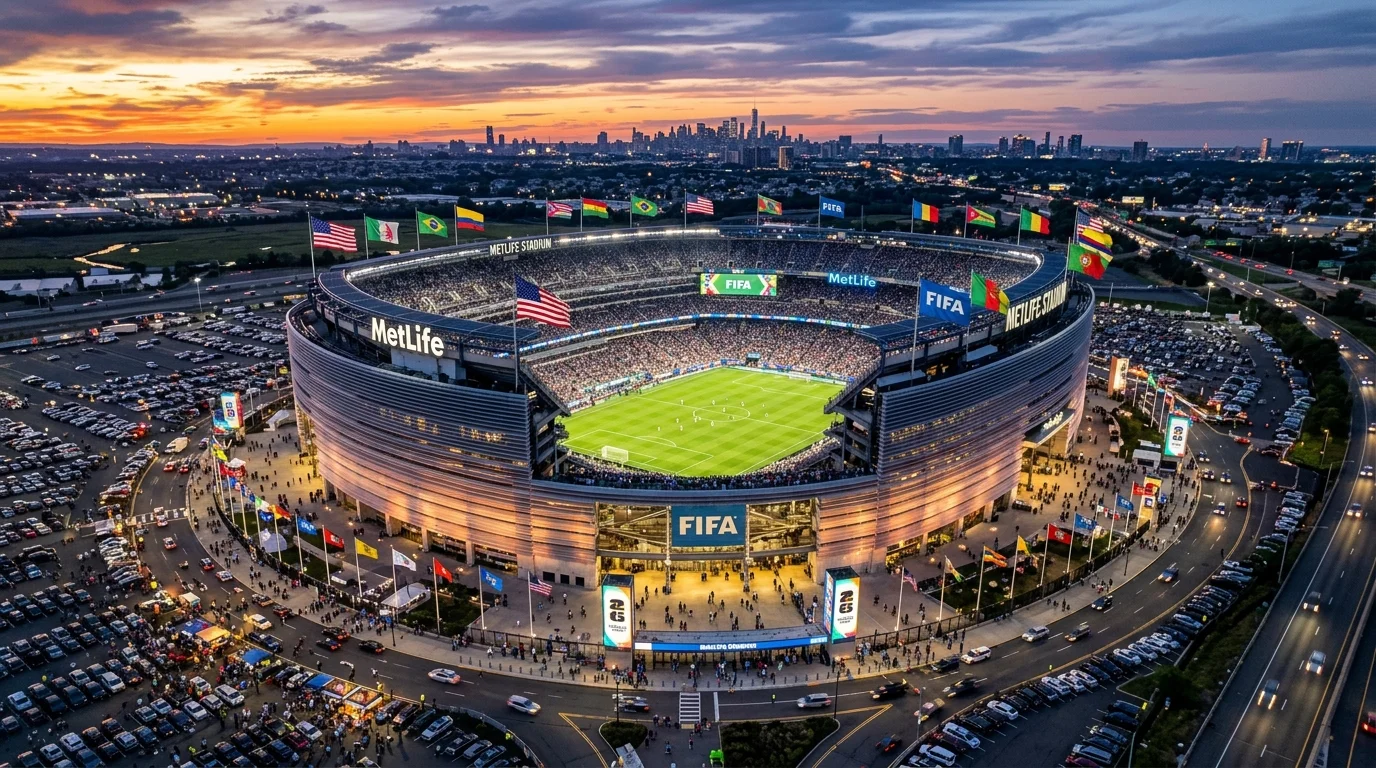
I remember when FIFA announced the expansion to 48 teams, and the immediate reaction from betting circles was scepticism. More teams meant diluted quality, they said. What it actually means is more matches, more markets, and more opportunities for the prepared punter. The 2026 World Cup runs from 11 June to 19 July across the United States, Mexico and Canada — 39 days of football featuring 104 matches. For context, Russia 2018 had 64 matches. Qatar 2022 had the same. We are entering genuinely uncharted territory.
The group stage divides those 48 nations into 12 groups of four. Each team plays three matches, and here is the critical change: the top two from each group advance automatically to the Round of 32, but so do the eight best third-placed teams. That third-place pathway fundamentally alters how we assess group dynamics. A single victory and a goal-difference calculation might be enough to progress. Teams that would have been eliminated under the old format now have lifelines. For betting purposes, this compression of the group stage creates tighter markets and more live qualification scenarios heading into the final matchday.
Tournament Format at a Glance
48 teams in 12 groups of four. Top two qualify automatically. Eight best third-placed teams also advance. Round of 32 replaces Round of 16. Knockout rounds then proceed through Round of 16, quarter-finals, semi-finals, and final. Total matches: 104 over 39 days.
The host cities span three countries and multiple time zones. The United States carries the bulk of the tournament with 78 matches across 11 venues. AT&T Stadium in Arlington, Texas hosts the most fixtures — nine in total. MetLife Stadium in East Rutherford, New Jersey hosts both semi-finals and the final on 19 July, making it the centrepiece venue. Mexico contributes three stadiums including the legendary Estadio Azteca in Mexico City, which opens the tournament with Mexico versus South Africa on 11 June. The Azteca becomes the first stadium to host three World Cups, having also staged the 1970 and 1986 editions. Canada adds two venues — BMO Field in Toronto and BC Place in Vancouver — marking the country's first time hosting World Cup matches.
For Irish punters, the geographical spread matters primarily because of kick-off times. Matches in the Eastern time zone — Boston, Philadelphia, New York, Miami, Atlanta — translate most favourably to IST. A 9pm ET kick-off means 2am IST, which is late but manageable. West Coast venues like Seattle and Los Angeles push that to 3am or later IST for evening fixtures. Mexico City operates on Central time, one hour behind the East Coast. I will break down the full schedule in IST later in this guide, but the pattern to understand now is that Irish viewers face predominantly late-night and early-morning football throughout the tournament.
The knockout stage condenses significantly. The Round of 32 runs from 1–4 July, Round of 16 from 5–8 July, quarter-finals on 11–12 July, semi-finals on 15–16 July, the third-place match on 18 July, and the final on 19 July. That final stretch from quarter-finals to the trophy presentation spans just eight days — intense for players and punters alike. Live betting during knockout matches becomes a test of stamina when you are watching from Dublin at 2am with extra time looming.
The altitude factor at Mexican venues deserves attention. Estadio Azteca sits 2,200 metres above sea level. European and South American teams from low-altitude countries historically struggle in these conditions during the opening 20–25 minutes of matches. Bookmakers occasionally underprice slow starts for such teams in Mexico City fixtures, and I have found value in first-half under markets when sea-level nations play their opening matches at altitude.
Understanding the tournament structure sets the foundation — but the real question for punters is which teams are priced to win it, and where the value sits across the outright markets.
Outright Winner Odds: Who Are the Bookmakers Backing?
Here is a number that should frame every outright conversation: since 1930, the pre-tournament favourite has won the World Cup only eight times out of 22 editions. That is a 36% strike rate. Punters who blindly back the shortest-priced nation would have shown a loss over nearly a century of tournaments. The value, historically, sits elsewhere — and the expanded 48-team format may amplify that tendency.
Argentina enter as defending champions following their 2022 triumph in Qatar. Lionel Messi, now 38, faces questions about tournament fitness and playing time. The bookmakers price them around 9/2, acknowledging both their quality and the burden of history — no team has successfully defended the World Cup since Brazil in 1962. France, runners-up in Qatar and champions in 2018, trade at similar odds. Their squad depth remains formidable, but Didier Deschamps' side have shown vulnerability in recent qualifiers. Brazil, perpetually the sentimental choice, sit around 5/1 to 6/1 depending on the book. Five-time champions never escape the pressure of expectation.
Current Outright Market Leaders
| Team | Fractional Odds | Group |
|---|---|---|
| Argentina | 9/2 | J |
| France | 9/2 | I |
| Brazil | 11/2 | C |
| England | 8/1 | L |
| Spain | 10/1 | H |
| Germany | 12/1 | E |
| Portugal | 14/1 | K |
England arrive priced around 8/1, reflecting their perpetual status as contenders who fall short at the decisive moment. The Three Lions have reached a Euro final and a World Cup semi-final in recent cycles but lack the tournament-winning pedigree that separates them from the top tier. For Irish punters watching the Premier League every weekend, England remains the default follow — love them or not, half the squad plays in familiar stadiums.
Host nations historically outperform their pre-tournament odds at World Cups. The United States, priced around 20/1, benefit from home advantage across 78 matches on their soil. South Korea reached the semi-finals as co-hosts in 2002. France won at home in 1998. The USA generation — Christian Pulisic, Weston McKennie, Gio Reyna — has matured since Qatar, and the psychological boost of playing in front of American crowds should not be dismissed. Mexico, the third co-host, sits around 40/1 and opens the tournament at the Azteca with 80,000 supporters behind them.
Where do I see value in the outright market? The each-way play interests me more than backing outright winners at short prices. A 20/1 or 25/1 selection that reaches the final returns a tidy payout on the place portion alone. The expanded knockout bracket creates more pathways for surprise semi-finalists. I explore outright winner odds and each-way strategies in dedicated analysis, but the principle here is straightforward: tournament football rewards patient capital on longer-priced contenders more consistently than favourite-backing.
The longest-priced World Cup winner in the modern era was Denmark in 1992 — except they won the Euros, not the World Cup. The actual longest-priced World Cup winner was Spain in 2010 at 7/1, considered an upset at the time despite their dominance of European football. No team priced above 14/1 has won the World Cup since Argentina's shock victory in 1978.
Defending champions carry a statistical curse beyond the anecdotal. The last five defending champions have failed to reach the semi-finals at the following tournament. Germany crashed out in the group stage in 2018 after winning in 2014. Spain exited in the groups in 2014 after their 2010 triumph. France failed to win a single match in 2002. The burden appears real, and Argentina's price arguably underweights this pattern.
Tool from KickOff26
36% since 1930 — and zero defending champions since 2014 reached the semis
Check any fractional odds against two real historical base rates: pre-tournament favourites, and defending champions.
Two separate historical patterns — pick the one that applies to your selection.
Which pattern applies?
Reading
—
Favourite pattern: the pre-tournament favourite has won only 8 of 22 World Cups since 1930 (36%). Defending champion pattern: the last five defending champions all failed to reach the semi-finals at the following tournament (0%). Both are small samples — patterns, not guarantees.
World Cup group matches finish level roughly 24% of the time, historically.
Reading
—
This hub cites 3/1 to 7/2 as the typical range for the draw in evenly-matched group fixtures — that range brackets the 24% historical rate almost exactly (25.0% and 22.2% implied respectively). Odds outside that range are worth a second look.
For information only, not financial advice. Problem Gambling Ireland
Outright markets provide the tournament's longest-running narrative, but the group stage is where match-by-match value accumulates. Let me walk through all 12 groups.
All 12 Groups at a Glance
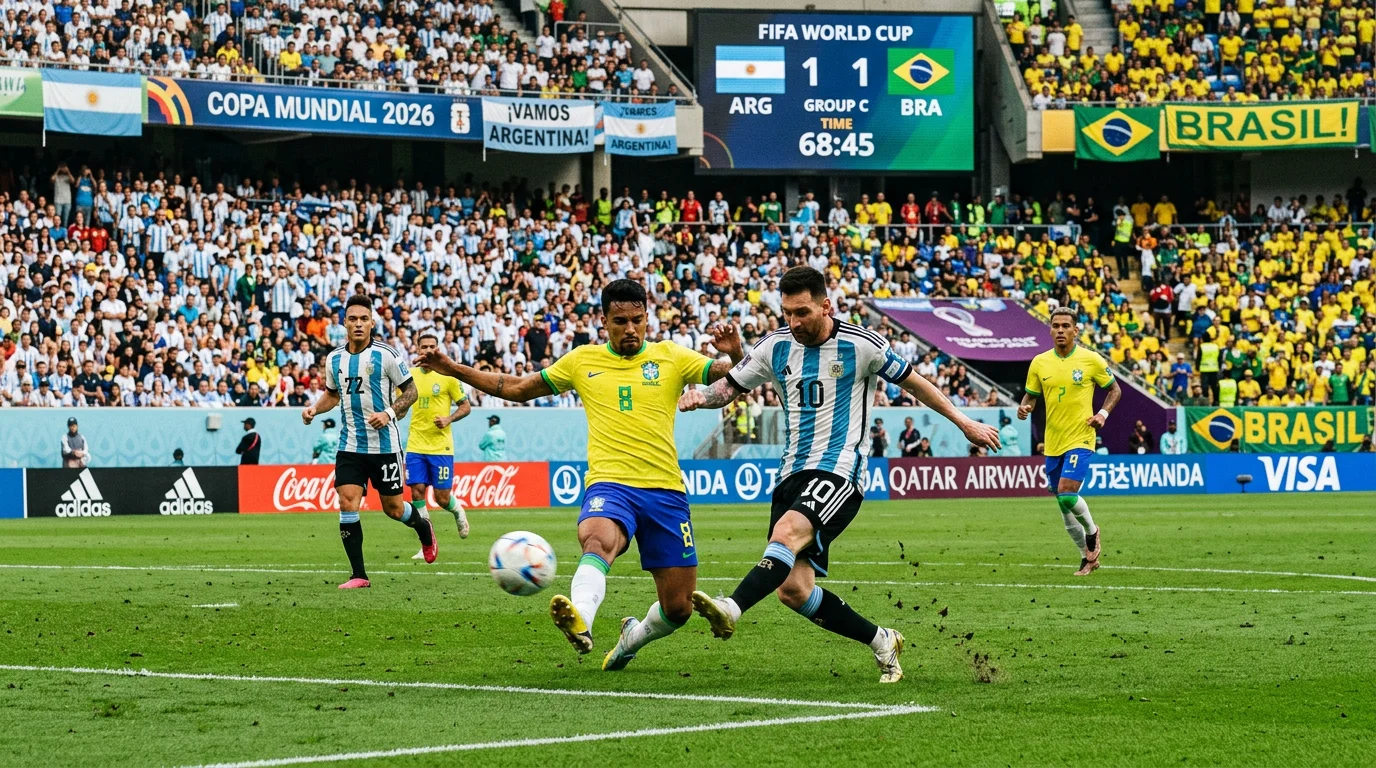
Twelve groups. Forty-eight teams. And more qualification permutations than any previous World Cup. I spent two days mapping the scenarios after the draw was finalised, and the conclusion was clear: the third-place pathway changes everything. Under the old 32-team format, finishing third meant elimination. Now, eight of those 12 third-placed teams advance. A single win plus a favourable goal difference could be enough. That dynamic compresses the betting markets and creates group-stage drama where previously there might have been dead rubbers.
| Group | Team 1 | Team 2 | Team 3 | Team 4 |
|---|---|---|---|---|
| A | Mexico | South Korea | South Africa | Czechia |
| B | Canada | Bosnia-Herzegovina | Qatar | Switzerland |
| C | Brazil | Morocco | Scotland | Haiti |
| D | USA | Paraguay | Australia | Turkey |
| E | Germany | Curaçao | Côte d'Ivoire | Ecuador |
| F | Netherlands | Sweden | Tunisia | Japan |
| G | Belgium | Iran | New Zealand | Egypt |
| H | Spain | Saudi Arabia | Cabo Verde | Uruguay |
| I | France | Senegal | Iraq | Norway |
| J | Argentina | Algeria | Austria | Jordan |
| K | Portugal | DR Congo | Uzbekistan | Colombia |
| L | England | Croatia | Ghana | Panama |
Group A opens the tournament at Estadio Azteca with Mexico versus South Africa on 11 June. The host nation carries enormous expectation, but South Korea's pedigree at World Cups — including that 2002 semi-final run — makes them dangerous. Czechia, fresh from breaking Irish hearts in the play-offs, enter as the group's fourth seed but possess enough quality to complicate Mexican ambitions. I expect Mexico and South Korea to advance, with Czechia potentially claiming a third-place spot. This group matters to Irish punters for obvious reasons — many will want to see Czechia struggle.
Group C demands attention. Brazil, Morocco, Scotland and Haiti produce the tournament's most compelling narrative collision. Brazil remain five-time champions seeking redemption after Qatar disappointment. Morocco reached the semi-finals in 2022 and carry that momentum. Scotland return to the World Cup for the first time since 1998 — the Tartan Army has waited 28 years for this. Haiti make their debut at the expanded tournament. For Irish supporters without their own team, Scotland offers the Celtic connection. The Scots face a brutal draw, but qualifying from third place remains plausible even against this competition. Full breakdowns of all group stage permutations appear in dedicated analysis.
Group L matters equally to Irish viewers. England, Croatia, Ghana and Panama compose a group that appears straightforward on paper but contains landmines. Croatia's golden generation — Modrić, now 40, potentially playing his final tournament — still demand respect. Ghana bring West African firepower and World Cup experience. England, priced as group favourites at around 1/4, should advance but have stumbled in supposedly simple groups before. The Group L preview covers match-by-match betting angles.
The third-place qualification pathway means fewer dead rubber matches in the group stage. Even teams with one point heading into the final matchday remain mathematically alive. This creates more competitive football and more volatile betting markets through the final whistle of every group-stage match.
Groups E and F present intriguing mid-tier battles. Germany's rebuild continues after underwhelming recent tournaments, and Group E — featuring Curaçao, Côte d'Ivoire and Ecuador — should allow safe passage. But Ecuador possess South American grit and Côte d'Ivoire reached the Africa Cup of Nations final recently. Group F throws together Netherlands, Sweden, Tunisia and Japan in what looks like the tournament's most balanced quartet. Any combination could advance. Japan's technical quality has improved dramatically, and Tunisia historically punch above their weight in tournament football.
Group H features Spain and Uruguay — two nations with World Cup pedigree — alongside Saudi Arabia and Cabo Verde. The Saudis shocked Argentina in the 2022 group stage, proving they can hurt elite opposition on their day. Cabo Verde make their World Cup debut. Group I gives France favourable opposition in Senegal, Iraq and Norway, but Senegal's African champions status means Les Bleus face at least one genuine test. Group J lets Argentina navigate through Algeria, Austria and Jordan — manageable on paper, though Algeria's organisation could frustrate.
The patterns I watch in group-stage betting: first-half markets in altitude matches at Mexican venues, under goals when elite teams face minnows (motivation drops, tempo slows), and draw no bet on third-tier nations in dead-rubber situations where established teams may rotate. The 48-team format is new territory, but tournament football principles endure.
Ireland will watch from the outside this summer — but we did not go quietly. The road to the play-offs and the penalty heartbreak in Prague deserves acknowledgment before we move forward.
Ireland's World Cup: The One That Got Away
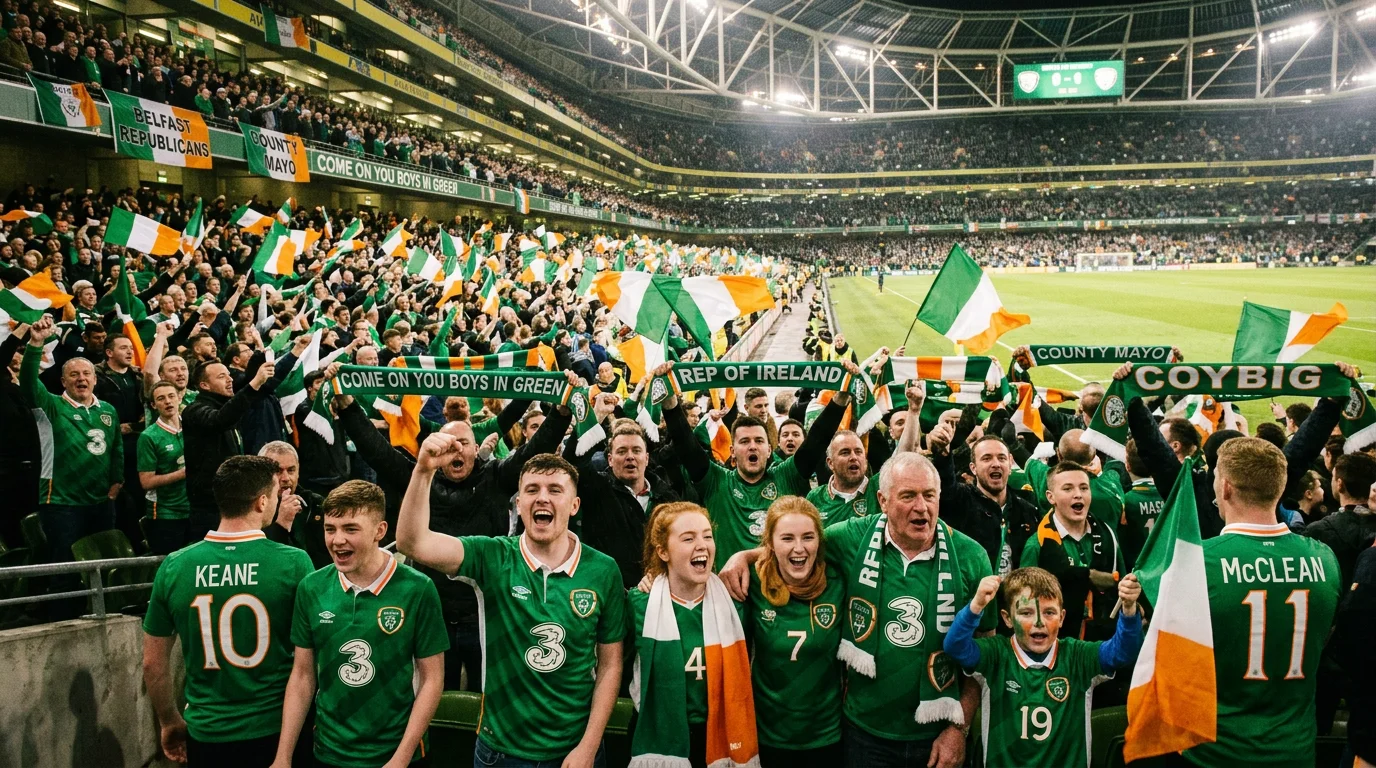
Prague, 26 March 2026, 21:32 local time. Caoimhin Kelleher saves the first Czech penalty. The away end erupts. Then Sammie Szmodics misses. Then Nathan Collins converts. Then the sequence blurs into that specific agony familiar to any Irish supporter — hope, despair, hope, despair, and finally the confirmation that we will not be going to North America. Czechia 2-2 Ireland, penalties 4-3 to the hosts. The Boys in Green were 90 minutes from a World Cup for the first time since 2002, and they fell on spot-kicks in central Europe.
I should not pretend objectivity here. I had booked provisional flights to New York. I had mapped the pub options near MetLife Stadium. Like thousands of Irish supporters, I had allowed myself to believe that Troy Parrott's form, Kelleher's shot-stopping, and Heimir Hallgrímsson's tactical organisation might finally end the 24-year wait. The qualifying group had gone well enough — second place behind Portugal, enough points to earn a play-off position. The semi-final draw gave us Czechia rather than Turkey or Sweden. It felt possible. It felt, for those final weeks of March, genuinely possible.
What hurts is how close Ireland came. Leading 2-0 in Prague before two Czech goals in 12 second-half minutes levelled the tie. Missed chances. A crossbar struck. The standard litany of "if only" that defines Irish football history. The 2002 squad reached the Round of 16 before losing on penalties to Spain. The 1990 squad exceeded all expectations under Jack Charlton. But between those moments of glory sit decades of near-misses and rebuilds. The class of 2026 will be remembered as another what-might-have-been generation.
Ireland have qualified for three World Cups in their history: 1990, 1994 and 2002. Their longest wait between appearances was 12 years (1994 to no qualification in 1998 through 2002). If the current drought extends to 2030, it will surpass that record.
So where does this leave Irish punters for World Cup 2026? In an oddly liberating position, I would argue. No emotional attachment clouds the analysis. No need to back Ireland at inflated prices because they are ours. We can assess the tournament with clear eyes, backing value where it exists and against overpriced sides without guilt. Some will follow England — the Premier League connection makes it inevitable. Some will rally behind Scotland, the Celtic cousins who finally ended their own 28-year wait. And some, myself included, will watch Czechia's group stage matches with particular interest, hoping the team that broke our hearts finds an early exit.
The narrative angles for Irish viewers are genuine. England in Group L, with coverage accessible and kick-off times relatively humane for the Eastern US matches. Scotland in Group C, facing Brazil on the grandest stage. Czechia in Group A, opening against South Africa and then facing Mexico at the Azteca. These storylines provide investment without the crushing expectation that accompanies supporting your own nation. Whether that constitutes consolation or merely a different flavour of football consumption, each Irish supporter must decide for themselves. I know where I stand: neutral but not passive, analytical but not emotionless.
Emotional recovery aside, the tournament offers 48 teams to analyse. Let me categorise them by realistic prospects — the favourites, the contenders, and the darkhorses worth a punt at long prices.
Teams to Watch: Favourites, Contenders and Darkhorses
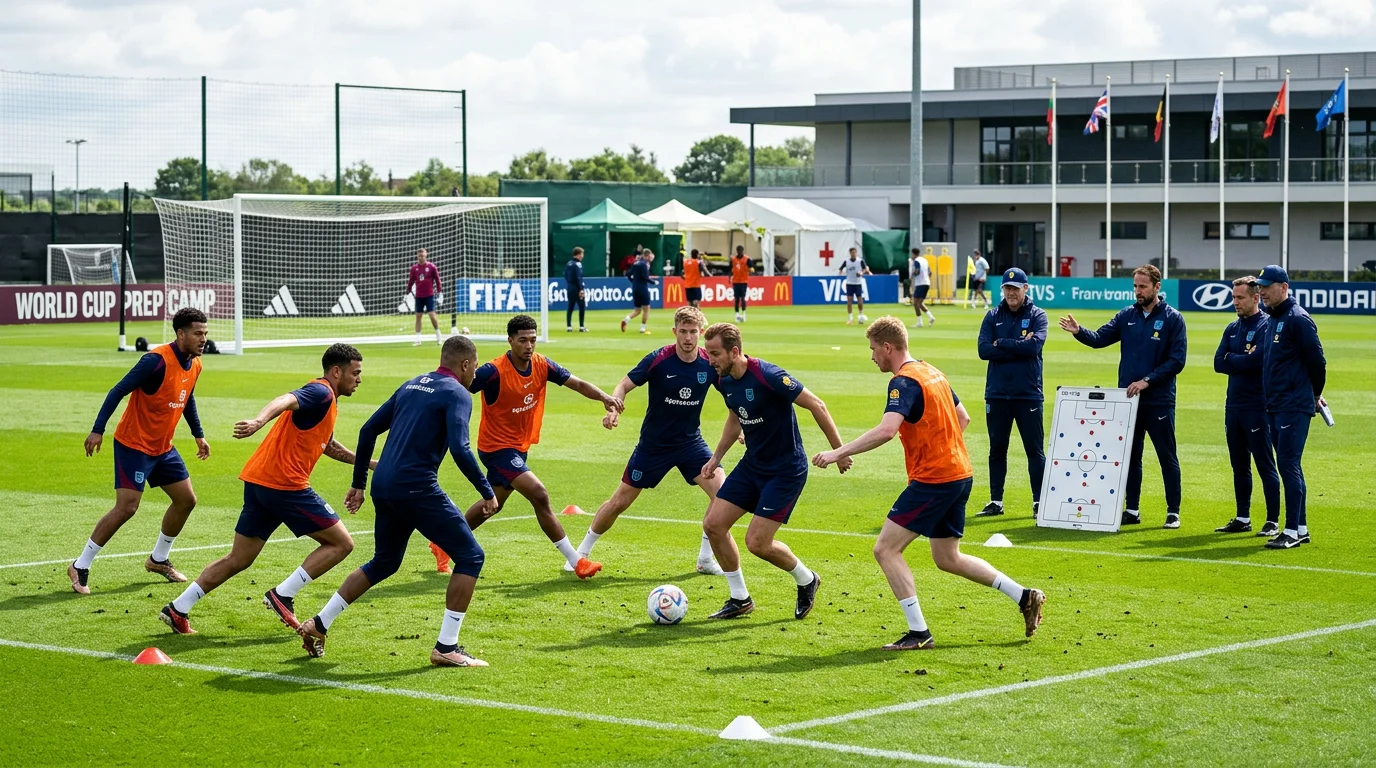
Ask any casual fan who will win the World Cup and they will name one of six teams: Argentina, France, Brazil, England, Spain or Germany. Ask a sharp punter the same question and they will answer with another question — at what price? The distinction matters enormously when allocating betting capital across a 39-day tournament. Favourites absorb heavy recreational money, compressing their odds. Contenders often trade at value. Darkhorses, occasionally, offer the asymmetric returns that justify the exercise.
The Favourites
Argentina carry the defending champions' burden alongside the Messi question. At 38, he remains transcendent when fit but cannot play every minute of a gruelling tournament. The supporting cast — Julián Álvarez, Enzo Fernández, Alexis Mac Allister — have matured since Qatar, yet the Albiceleste's depth beyond the starting eleven remains thinner than France or Brazil. I rate them highly but question whether 9/2 offers genuine value given the historical failure rate of defending champions.
France present the deepest squad in the tournament. Kylian Mbappé, Antoine Griezmann, and a midfield rotation that would constitute a starting eleven for most nations. Deschamps' pragmatism translates to tournament knockout football. They know how to win ugly. At similar odds to Argentina, France arguably represent fairer value — no defending-champion curse, no reliance on a single ageing talisman.
Brazil have not won the World Cup since 2002, which feels impossible given their talent production. The Seleção enter with pressure unique to their footballing culture. Anything less than the trophy constitutes failure. Vinícius Júnior and Rodrygo bring Real Madrid quality, but the defence has leaked goals in qualifying. At 11/2, they sit correctly priced — not undervalued, not a poor bet, simply fair.
The Contenders
England at 8/1 intrigue me. The Three Lions possess tournament experience from recent cycles and a generation comfortable on the biggest stages. Harry Kane, despite club trophy drought, consistently delivers for country. The midfield options — Bellingham, Rice, Foden — rival any nation's. What they lack is tournament-winning pedigree in living memory. The 1966 trophy gathers dust while German, Italian, French, Spanish and Argentine sides have all lifted the prize since. Still, 8/1 offers reasonable each-way value if they reach another semi-final or final.
Spain's generational refresh produced the Euro 2024 winners, and the young core — Pedri, Gavi, Lamine Yamal — should only improve by summer 2026. At 10/1, they represent my personal favourite each-way bet. Group H appears navigable, and their technical style suits knockout football against defensive opponents. Detailed coverage of all 48 teams breaks down squad strengths and tournament paths.
Portugal at 14/1 and Netherlands at 16/1 round out the plausible contenders. Cristiano Ronaldo's involvement at 41 years old adds uncertainty to Portugal's setup, but their depth beyond the iconic forward has improved dramatically. The Dutch, under a new managerial approach, lack consistency but possess individual match-winners capable of moments that decide knockout ties.
The Darkhorses
This is where value-seeking punters earn returns. The 48-team format creates additional knockout rounds and longer paths to the final, but it also means weaker opponents in early stages for teams positioned favourably. The USA at 20/1 benefit from home advantage across 78 matches. The psychological boost matters, and this American generation has quality. Morocco at 25/1 brought that energy to Qatar's semi-finals — why should 2026 be different? Colombia at 33/1, if drawn into a favourable knockout bracket, possess the attacking talent to upset higher seeds.
Each-way betting on contenders (8/1 to 14/1) and speculative outrights on darkhorses (20/1 to 40/1) historically outperform favourite-backing at World Cups. The expanded format may amplify this tendency as more knockout rounds create additional upset opportunities.
I cover five darkhorses worth a punt in dedicated analysis. The principle underlying all outright betting remains constant: tournament football rewards patience, selectivity, and the discipline to accept that no selection is certain. Even Argentina lose. Even France stumble. The question is whether your price compensates adequately for the inherent uncertainty.
Team selection forms the foundation, but market selection matters equally. Understanding the betting options available — from outright futures to in-play specials — determines how effectively you deploy your tournament bankroll.
Betting Markets Explained: From Outrights to In-Play
My first World Cup punt was an accumulator in 1998. Five matches, all favourites, all to win — and Denmark knocked out Nigeria to void the entire thing on matchday two. That experience taught me something valuable: market selection matters as much as team selection. The World Cup offers dozens of betting angles beyond simple match results, and understanding which markets suit your approach is foundational to tournament success.
Outright and Futures Markets
The outright winner market opens months before kick-off and remains available throughout the tournament. Prices adjust based on results, injuries, and money flow. Pre-tournament outrights typically offer the best value for patient punters — once the tournament begins and favourites progress, their odds compress further. Each-way terms apply to outright betting, typically paying for finalists at 1/4 or 1/5 the odds. This means a 20/1 selection reaching the final returns profit on the place portion even without winning. Group winner markets and top scorer futures provide additional outright opportunities with different risk-reward profiles.
Each-Way Betting — A bet placed in two equal parts: one on the selection to win outright, one on the selection to place (reach the final or semi-finals, depending on bookmaker terms). If the selection wins, both parts pay. If the selection places but does not win, only the place portion pays at a fraction of the outright odds.
Match Betting
The 1X2 market — home win, draw, away win — remains the most liquid match betting option. World Cup group stages produce more draws than league football, historically around 24% of matches. The draw trades at approximately 3/1 to 7/2 in typical group fixtures, offering value when two evenly-matched sides meet. Over/under goals markets let you bet on total match goals against a line, usually 2.5 goals. Both teams to score and correct score markets add further dimensions. Full explanations of all World Cup betting markets appear in dedicated reference material.
Accumulators
Accumulators — accas, in punter parlance — combine multiple selections into a single bet. All legs must win for the acca to pay, but the combined odds create larger potential returns from smaller stakes. Tournament football suits certain acca approaches: backing favourites to qualify from groups, backing under goals in low-stakes matches, building each-way accumulators on group winners. The risk compounds with each leg, and I generally advise limiting accas to three or four selections for this tournament. Guidance on World Cup accumulator strategy provides match-by-match considerations.
Accumulator (Acca) — A single bet combining multiple selections. All selections must win for the bet to pay. Combined odds multiply across selections, creating higher potential returns but increased risk.
In-Play Betting
Live betting during matches has transformed tournament football consumption. Odds update continuously based on match events — goals, red cards, momentum shifts. The World Cup 2026 schedule creates specific challenges for Irish punters engaging with in-play markets. Most evening fixtures in North America fall between midnight and 3am IST. Fatigue affects decision-making. I have made poor in-play choices at 2:45am more times than I care to admit. The discipline required for profitable live betting doubles when operating through the night. Setting hard stop-loss limits before matches begin helps mitigate sleep-deprived errors.
Player Specials and Props
Anytime scorer, first scorer, player cards, player assists — these markets focus on individual performances rather than match outcomes. The top scorer market runs tournament-long and typically offers each-way terms. Historical patterns suggest forwards from favourites dominate this market — teams that progress deeper play more matches and create more scoring opportunities. However, the expanded 48-team format means extra knockout rounds and potentially more goals for contenders who reach the later stages.
Understanding markets is half the equation. The Irish-specific context — timezone management, regulatory changes, bookmaker landscape — shapes how you actually execute these betting strategies.
The Irish Punter's Companion: Timezone, Bookmakers and the Law
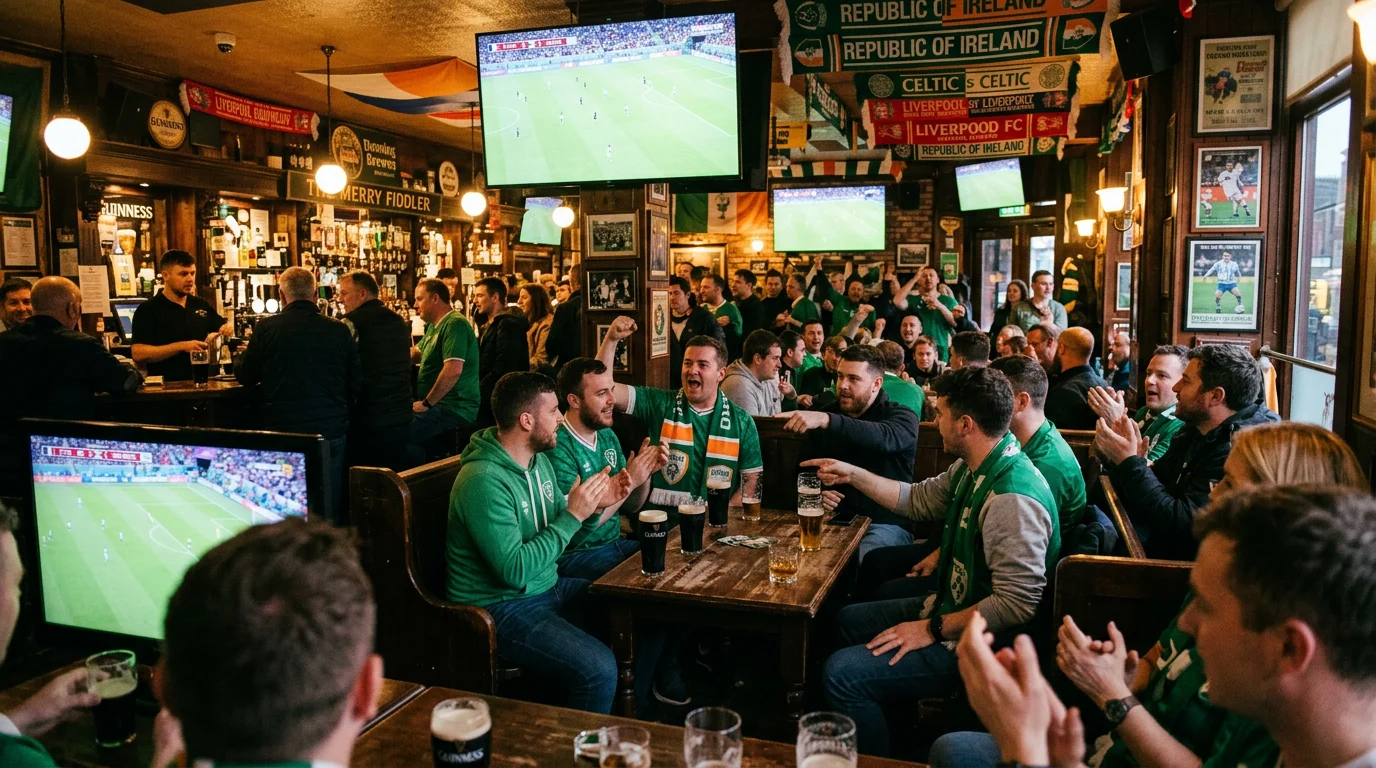
The last World Cup held predominantly in North American timezones was USA 1994. I was too young to bet then, but I remember the matches — late evenings and early mornings, sleep schedules disrupted, entire households reorganising around kick-offs. Thirty-two years later, World Cup 2026 brings those challenges back for Irish viewers, compounded by a transformed regulatory landscape that did not exist in 1994.
The IST Schedule Challenge
Irish Standard Time sits five hours ahead of Eastern Time during summer. A 9pm ET kick-off — the standard evening slot for North American broadcasts — means 2am IST. West Coast matches starting at 6pm Pacific push even later. The group stage features three daily kick-off windows: morning in North America (afternoon IST), afternoon (evening IST), and evening (late night to early morning IST). Irish viewers have the kindest experience during afternoon IST matches, roughly corresponding to breakfast-time kicks in the Americas. The late sessions, however, dominate the schedule — particularly for knockout rounds where primetime North American television slots take priority.
For in-play betting, this creates a discipline test. Decision-making degrades with fatigue. I recommend pre-setting any live bets before matches begin, deciding on triggers (backing a team if they concede first, laying a team at specific odds thresholds) rather than making reactive choices at 2:30am. Full conversion tables and strategic guidance appear in the IST schedule breakdown.
The Gambling Regulation Act 2024 and GRAI
The regulatory context for Irish punters has changed fundamentally. The Gambling Regulation Act 2024 introduced comprehensive reform after decades of outdated legislation. The Gambling Regulatory Authority of Ireland — GRAI — began operations in 2025 and started accepting remote betting licence applications from February 2026. By the time the World Cup kicks off, the new framework will be fully operational.
What does this mean practically? Several things. Credit card gambling is prohibited — deposits must come from debit cards or bank transfers. Advertising faces watershed restrictions, with no gambling promotion on television or radio between 5:30am and 9pm. VIP programmes, free bets as inducements, and free credit offers are banned. Bookmakers must implement mandatory deposit limits and provide responsible gambling tools. The maximum penalty for operator violations reaches €20 million or 10% of turnover. These protections exist because Ireland has historically shown elevated problem gambling rates compared to European averages.
GRAI Key Dates
9 February 2026: Remote betting licence applications open. 1 July 2026: Remote betting licences issued. 1 December 2026: In-person betting licences issued. The World Cup coincides with the initial remote licensing phase.
The Bookmaker Landscape
Paddy Power, BoyleSports, and other established Irish bookmakers operate under the incoming GRAI framework. International operators like Bet365, Betfair, and William Hill also serve Irish customers with appropriate licensing. For World Cup 2026, the key differentiation points between bookmakers are odds competitiveness, each-way terms on outrights, and in-play market depth. I do not recommend specific operators — that judgement belongs to individual punters evaluating their own priorities. What I do advise is comparing odds across multiple books for significant bets. The difference between 8/1 and 9/1 on an England outright represents meaningful value over the stake.
Irish punting culture runs deep. The local bookie remains a community fixture even as online platforms dominate volume. World Cup 2026 will likely see peak engagement across both channels — physical shops for the social experience, mobile apps for the convenience and in-play access. However you engage, the regulatory framework now provides consumer protections that simply did not exist previously. That represents progress, whatever your political view on gambling reform.
The tournament structure, market options, and Irish context now established — let me lay out the calendar dates that matter for planning your World Cup betting approach.
Key Dates and Tournament Timeline
I keep a tournament calendar pinned above my desk from May onwards. The rhythm of World Cup betting differs from league football — compressed windows of intense activity separated by rest days. Understanding this rhythm helps structure bankroll management and prevents the exhaustion that leads to poor decisions in week three.
| Phase | Dates | Matches | Notes |
|---|---|---|---|
| Opening Match | 11 June | 1 | Mexico vs South Africa, Estadio Azteca |
| Group Stage | 11–28 June | 96 | Three matches per team across 18 days |
| Round of 32 | 1–4 July | 16 | New knockout round for 48-team format |
| Round of 16 | 5–8 July | 8 | Traditional knockout stage begins |
| Quarter-Finals | 11–12 July | 4 | Eight teams remain |
| Semi-Finals | 15–16 July | 2 | MetLife Stadium hosts both matches |
| Third-Place Match | 18 July | 1 | Consolation final |
| Final | 19 July | 1 | MetLife Stadium, East Rutherford, NJ |
The group stage concentration is intense — 96 matches in 18 days means an average of 5.3 matches daily. Some days feature six or seven fixtures. This creates opportunities for accumulators across simultaneous matches and challenges for anyone attempting to follow the tournament comprehensively. I recommend identifying priority matches in advance rather than attempting to watch everything. Quality observation beats exhausted quantity.
The transition from group stage to knockout rounds brings a notable gap. Group stages conclude on 28 June, but the Round of 32 does not begin until 1 July. Those two rest days allow teams to recover and punters to reassess. Pre-tournament outright bets either look shrewd or questionable by this point. The knockout bracket crystallises, revealing which sides of the draw appear favourable. Late outright value sometimes emerges for teams with kind paths to the semi-finals.
The 2026 World Cup final falls on 19 July, exactly 56 years after Brazil's 1970 triumph in Mexico City — the tournament widely considered the greatest ever played. Mexico hosts matches again, though the final venue has moved north to New Jersey.
From quarter-finals to final spans just eight days. This compression favours squads with depth, as rotation becomes essential and injuries accumulate. Betting patterns shift accordingly — individual match markets matter more than futures once the knockout rounds begin, and in-play opportunities multiply as fatigued teams fluctuate in performance levels within matches.
The full tournament predictions section provides group-by-group forecasts and knockout stage projections based on the confirmed draw. My recommendations will evolve as the tournament approaches and squad news, form, and odds movements provide additional information.
The essential framework is now in place. Before I finish, let me address the questions Irish punters most frequently ask about World Cup 2026 betting.
Frequently Asked Questions
When does the World Cup 2026 start and finish?
The tournament runs from 11 June to 19 July 2026 — a 39-day competition featuring 104 matches. The opening match sees Mexico face South Africa at Estadio Azteca in Mexico City. The final takes place at MetLife Stadium in East Rutherford, New Jersey. Group stages run from 11–28 June, with knockout rounds beginning on 1 July.
Why did Ireland not qualify for World Cup 2026?
Ireland reached the UEFA play-off semi-finals after finishing second in their qualifying group behind Portugal. On 26 March 2026, they faced Czechia in Prague. Despite leading 2-0, Ireland conceded twice in the second half and lost the subsequent penalty shootout 4-3. It was the closest the Republic of Ireland came to World Cup qualification since 2002.
What format does the 48-team World Cup use?
The 48 teams divide into 12 groups of four. Each team plays three group matches. The top two from each group qualify automatically for the Round of 32, along with the eight best third-placed teams. The knockout bracket then proceeds through Round of 32, Round of 16, quarter-finals, semi-finals, and final.
Are fractional or decimal odds used in Ireland?
Irish bookmakers predominantly display fractional odds — the format showing potential profit relative to stake (e.g., 5/1 means €5 profit for every €1 staked). Decimal odds are also available on most online platforms. This guide uses fractional odds throughout to match Irish convention, though conversion between formats is straightforward.
What time do World Cup matches kick off in IST?
Most evening matches in North America translate to late night or early morning in Irish Standard Time. A 9pm ET kick-off — standard for primetime US television — equals 2am IST. West Coast evening matches push even later. The most IST-friendly fixtures are morning or early afternoon kick-offs in North America, corresponding to afternoon or evening viewing in Ireland.
Can I bet on the World Cup using a credit card in Ireland?
No. The Gambling Regulation Act 2024 prohibits the use of credit cards for gambling in Ireland. Deposits must be made via debit card, bank transfer, or other approved payment methods. This regulation applies to all licensed operators serving Irish customers.
What each-way terms apply to World Cup outright bets?
Each-way terms vary by bookmaker. Typical terms for World Cup outright winner pay for reaching the final at 1/4 or 1/5 the outright odds. Some bookmakers offer enhanced each-way terms paying for semi-finalists. Always check specific terms before placing each-way bets, as they significantly affect potential returns.
World Cup 2026 arrives as the largest tournament in football history — 48 nations, 104 matches, three host countries, and a format that breaks from everything punters have studied over previous cycles. The expanded structure creates uncertainty, and uncertainty creates opportunity. Whether you approach the tournament through outright markets, group-stage accumulators, match-by-match analysis, or disciplined in-play betting during those long IST nights, the framework outlined here provides starting points for deeper engagement.
Ireland will not be there, and that absence stings. Prague happened. The penalty shootout happened. But Irish punters remain, and World Cup summers belong to us as much as anyone. I will update this hub throughout the lead-up to kick-off and during the tournament itself, adding analysis as squad news emerges, odds shift, and group-stage results reshape the knockout picture. The pillar pages linked throughout — on comprehensive betting strategy, on odds, on teams, on groups, on predictions — provide the detailed coverage that complements this overview.
Set your limits before the tournament begins. Respect the GRAI framework that now governs Irish gambling. Remember that no outcome is certain, no analyst infallible, and no bet worth more than you can comfortably lose. Within those constraints, enjoy the football. Enjoy the analysis. And if Czechia crash out in the group stage, I will not pretend to be disappointed.
